Fourth of July fireworks can feel fun and familiar to people, but many dogs experience them as sudden, unpredictable danger. The booming sound, flashing light, smoke, guests, open doors, food, and leftover debris can all stack up at once. Even a normally confident dog may shake, hide, bark, pant, pace, try to escape, or refuse to settle.
The good news is that most fireworks trouble can be reduced with a simple plan. You do not have to make the night perfect. You just need to make it safer, quieter, and easier for your dog to understand what to do.
Why Fireworks Are So Hard on Dogs
Dogs hear differently than we do, and fireworks do not arrive like ordinary noise. They boom without warning, change direction, shake windows, and repeat for hours in some neighborhoods. A dog cannot connect the sound with a holiday celebration, so their body may treat it like a threat.
That fear can show up in many ways: trembling, drooling, whining, barking, hiding, pacing, digging, trying to climb fences, scratching at doors, refusing food, having accidents inside, or clinging to a person. Some dogs freeze. Others bolt. The biggest danger is not just anxiety itself. It is what panic can make a dog do.
The Biggest Safety Risks on July 4
Escape is one of the main concerns. A frightened dog may run through an open door, slip a collar, push through a gate, or dig under a fence. Even dogs who usually stay close can make fast, surprising choices when fireworks start.
Backyard hazards are another issue. Firework debris, spent casings, glow sticks, skewers, charcoal, and party trash can be dangerous if a curious dog chews or swallows them. The American Veterinary Medical Association recommends keeping pets away from fireworks, charcoal, glow sticks, and food items that can harm them.
Food is part of the risk too. Rich barbecue scraps, bones, alcohol, desserts, chocolate, grapes, onions, and unattended plates can turn a noisy night into a sick-dog night. If guests are coming over, assume your dog will have more chances than usual to grab something they should not.
Start Before Sunset
The best fireworks plan starts while the day is still calm. Take your dog out for a bathroom break and exercise earlier than usual, before the neighborhood gets loud. Make sure collars fit properly, ID tags are readable, and microchip information is current.
Walk the yard before dark. Pick up waste, toys, bones, trash, and anything your dog might trip over, chew, or carry if they get nervous. Secure gates and check side yards. If your dog is already anxious, avoid leaving them outside even for a short stretch once fireworks may begin.
Create a Safe Indoor Room
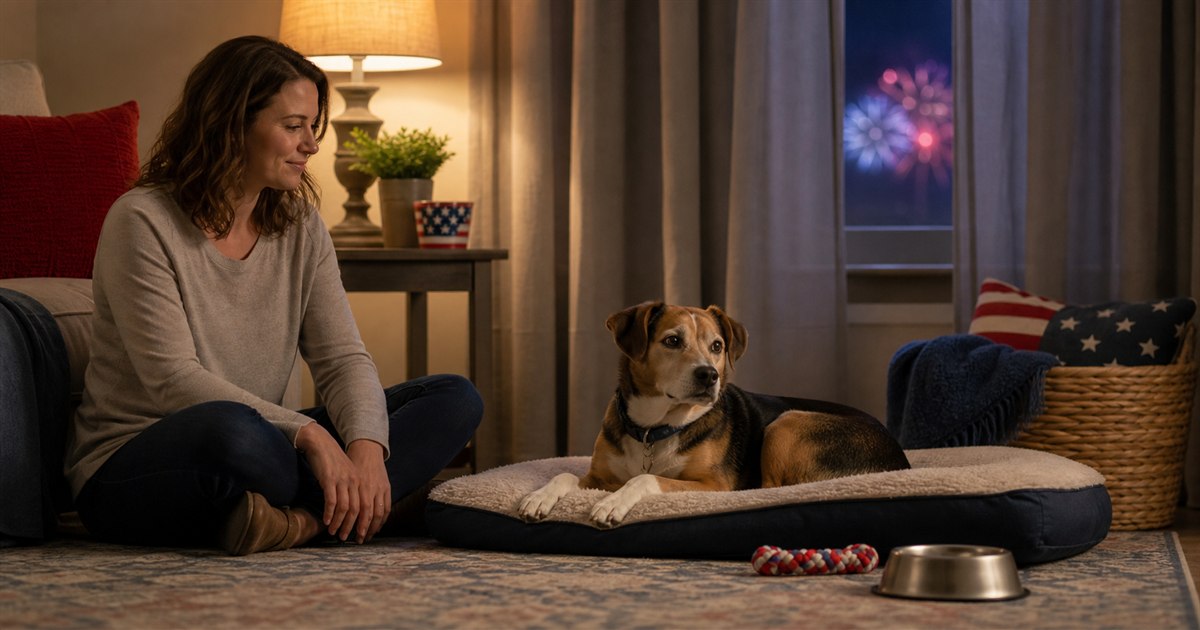
Choose a room before the noise starts. Interior rooms with fewer windows are often better. Close curtains or blinds, bring in a bed or crate if your dog already likes one, add water, and offer a familiar toy, chew, lick mat, or puzzle feeder. The ASPCA suggests soft music, an interior room, and enrichment activities to help pets stay calmer during fireworks.
Use steady background sound: a fan, white noise machine, TV, or soft music. The goal is not to drown out every boom. It is to make the sound less sharp and less surprising. Keep the room comfortable and boring in the best possible way.
Stay Calm and Let Your Dog Choose Comfort
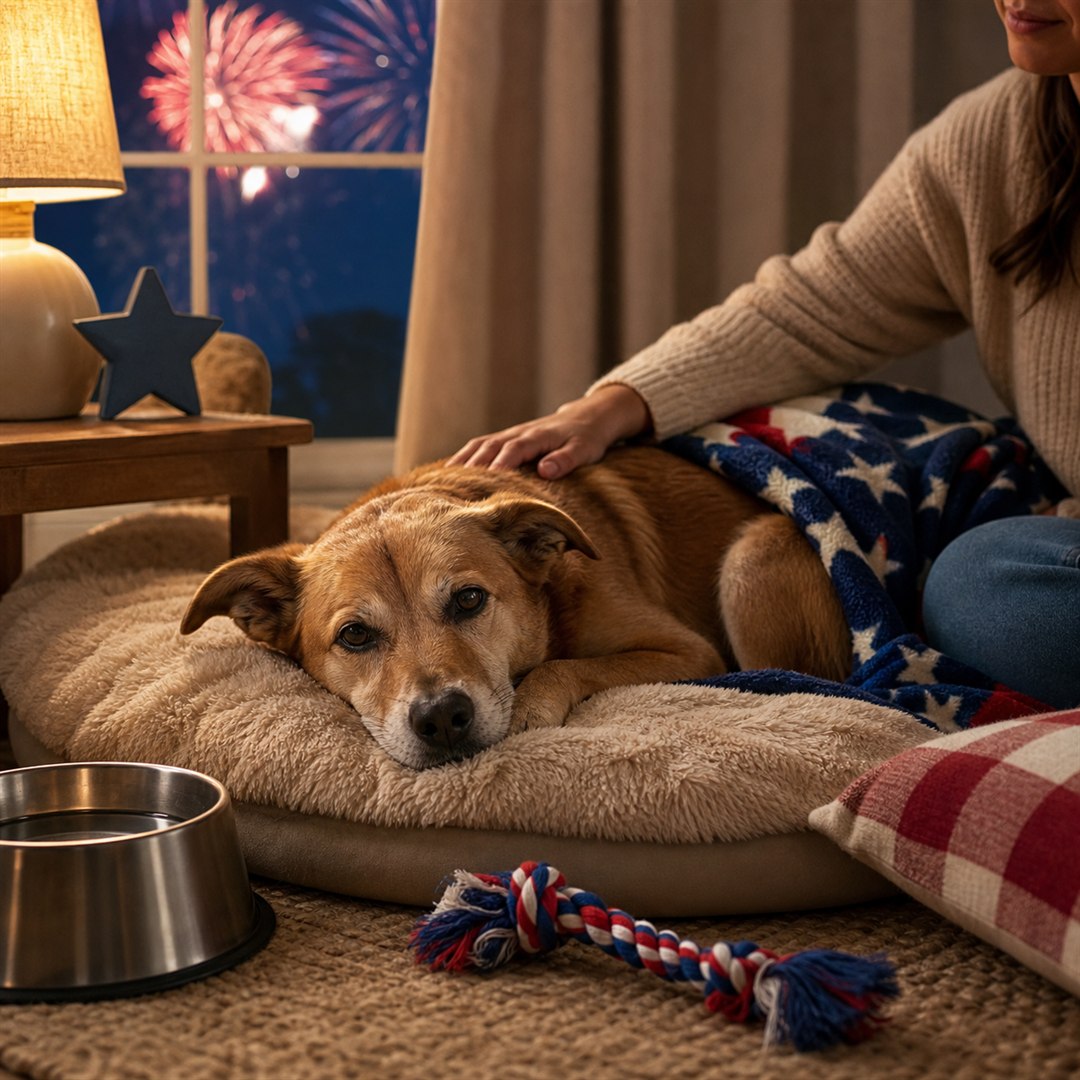
You can comfort your dog. Calm attention does not reward fear the way people sometimes worry it will. Sit nearby, speak normally, and let your dog decide whether they want touch, space, their crate, the bathroom floor, or a tucked-away corner.
Avoid forcing your dog to face the sound, dragging them outside to watch fireworks, or scolding fearful behavior. Panic is not stubbornness. It is a stress response. Your steady routine is more helpful than a big reaction.
Be Careful With Calming Products
Anxiety vests, snug shirts, pheromone products, chews, and supplements may help some dogs, but they do not work the same for every pet. Try them before the holiday if possible so July 4 is not the first test. If your dog has severe noise anxiety, destructive panic, escape attempts, or a history of hurting themselves during storms or fireworks, call your veterinarian ahead of time. The American Kennel Club also recommends veterinary guidance when anxiety is severe.
Do not give human medication, extra supplements, or CBD products without talking to your vet. A product that sounds calming can still be unsafe for the wrong dog, dose, or health condition.
After the Fireworks, Check the Yard
Before your dog goes out the next morning, do a quick yard scan. Look for firework debris, food wrappers, skewers, charcoal, broken pieces, sharp items, and trash that may have blown in. Check along walls, gates, turf edges, gravel runs, and patio corners.
If your dog was too anxious to potty normally during the noise, give them a calm morning routine. Keep the first outing supervised, especially if they were startled the night before. Dogs can stay keyed up after the fireworks stop.
A Simple July 4 Dog Safety Checklist
- Exercise and potty your dog before fireworks start.
- Bring dogs indoors before sunset and keep them away from fireworks displays.
- Close doors, windows, curtains, blinds, and gates.
- Use white noise, a fan, TV, or soft music to reduce sudden sound spikes.
- Set up a safe room with water, bedding, and familiar enrichment.
- Make sure collars, ID tags, and microchip details are current.
- Keep barbecue food, alcohol, bones, desserts, skewers, charcoal, glow sticks, and fireworks away from pets.
- Check the yard for debris before letting your dog out after the holiday.
- Talk with your veterinarian before the holiday if your dog has severe anxiety.
A Cleaner Yard Helps the Whole Weekend Feel Calmer
Fireworks are already enough stimulation. A yard full of waste, odor, trash, or party debris makes the holiday harder to manage, especially when dogs are pacing, sniffing, hiding, or needing quick potty breaks between loud bursts.
New recurring service special: get our Full Elite Yard Refresh, a value up to $150.00, to give your yard a cleaner starting point before regular visits begin.
Get a fast quote when you want the simplest next step.
No pressure, no big sales pitch. Just a softer landing for the dogs who use that space every day. Whether you handle the cleanup yourself or let us take it off the list, the goal is the same: a safer dog, a calmer home, and a yard that is ready for normal life again once the fireworks fade.